Artist
Wu-Tang Clan
Albums

Protect Ya Neck - EP
Method Man
![Enter The Wu-Tang (36 Chambers) [Expanded Edition]](/_next/image?url=https%3A%2F%2Fapi.igotalist.com%2Fstorage%2Fv1%2Fobject%2Fpublic%2Flist-thumbnails%2Fwu-tang-clan%2Fenter-the-wu-tang-36-chambers-expanded-edition.jpg&w=640&q=75)
Enter The Wu-Tang (36 Chambers) [Expanded Edition]
100 Best Albums In 1993, the Wu-Tang Clan were a grim, grimy, grindhouse alternative to G-funk’s baroque gangsta cinema: If Dr. Dre’s lush, lowrider-ready grooves were Terminator 2, then the scratchy, bloody, distorted productions of RZA on their debut album were Reservoir Dogs. Emerging from New York City’s most underrepresented borough—the literal island of Staten—here was a sound that, by nature or nurture, existed in its own raw, unapologetic bubble: corroded soul breaks, snatches of dialogue and sound effects from arcane turn-of-the-’70s Hong Kong kung fu flicks, distended keyboard lines, tape noises, snaps, and stutters. Wu-Tang emerged as a nine-member crew in the post-MTV age of small cliques, a mix of styles and voices that eventually carried more than a few solo careers: The violent beat poetry of Raekwon, Ghostface Killah, and Inspectah Deck; the drunken sing-to-scream ping-pong of Ol’ Dirty Bastard; the $5 words and scientific flows of GZA and Masta Killa; the boisterous coaching of RZA; the gritty rasp of U-God; and the fame-ready slick talk of Method Man, who was already getting a star turn on his eponymous track. Though melancholy reminiscences like “Can It Be All So Simple,” “C.R.E.A.M.,” and “Tearz” made a trilogy of evocative narratives, the Wu provided few easy inroads to their mythology and poetry. Instead, America was forced to enter their chamber, a lyrical swarm of hip-hop slang, the Five-Percent Nation’s Supreme Mathematics, and skits that sounded like taped conversations. They brought a singular ruckus and everyone from the similarly crew-oriented Odd Future, the wordy Logic, the mafioso-fueled Pusha T, the wild-styled Young Thug, and the noisy Sheck Wes all owe different types of gratitude.

Enter the Wu-Tang (36 Chambers)

C.R.E.A.M. (Cash Rules Everything Around Me) - EP
Wu-Tang Forever
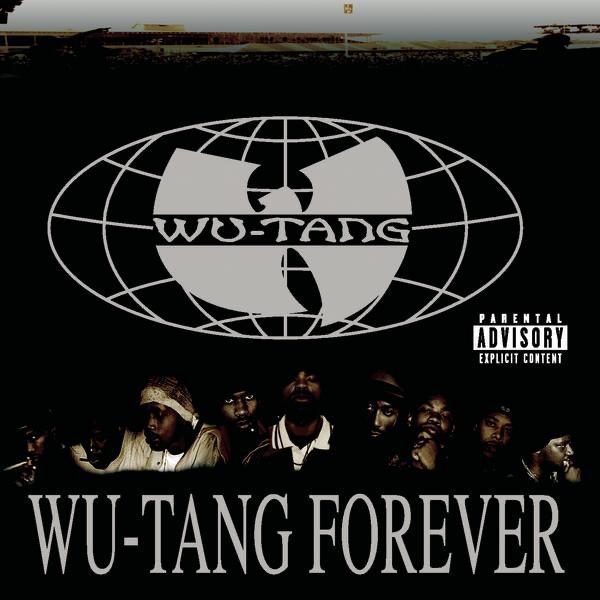
Wu-Tang Clan’s first album (Enter the Wu-Tang) was so successful—and so successful on the group’s own terms—that by the time they made their second they could’ve done pretty much whatever they wanted. It wasn’t just the scale of Wu-Tang Forever that felt decadent, it was the sense of 10 talented and very different artists letting themselves burrow further into their own styles and idiosyncrasies—whether it was the way Ghostface’s wordplay could make a conventional street narrative shimmer to the point of feeling almost supernatural (“Impossible”) or the way RZA’s weird layers of grainy samples and amateurishly played synthesizers sounded both like outsider art and the vanguard of blockbuster rap (“Triumph”). He’d famously promised the rest of the group that if they gave him five years, he’d make them legends, and Wu-Tang Forever is when his promise came true. You can trace the influence on modern hip-hop if you want. The way “Triumph” anticipated the so-called chipmunk soul of producers Just Blaze and early Kanye West, the sprawl of big posse albums like The Diplomats’ Diplomatic Immunity, the RZA-style way an artist like Tyler, The Creator took music and ideas that felt totally uncommercial and made it work in the mainstream. But the reality is that there was nobody like Wu-Tang either before or since, and their weird stew of crime tales (“The M.G.M.”), surreal battle raps (behold U-God on “Bells of War”), and Afrocentric philosophy (“Wu-Revolution”) gave a broader picture of how rap could sound and feel more than any other artist at the time. Yeah, it could be a little messy and long-winded—but if you didn’t have an entire U-God track about the healing powers of a good massage (“Black Shampoo”), it wouldn’t be the Wu-Tang Clan. This is what it looks like from the top of the world.

Reunited (The Remixes) - EP

Wu-Tang Killa Bees: The Swarm
Back in the mid- to late '90s, Shaolin's mighty Wu-Tang Clan could do no wrong. They were nine dudes deep, responsible for many of the era's defining jams. Everybody got their own solo albums (many of them classics in their own right), and they extended the W stamp of approval to countless other affiliate artists. On Wu-Tang Killa Bees: The Swarm, official members Ghostface, RZA, Raekwon, Method Man, Masta Killa, and Inspectah Deck share studio time with protégés like Sunz of Man, Cappadonna (who'd later become the 10th Clansman), Killarmy, Hell Razah, Shyheim, Timbo King, Killa Priest, and many more. Somewhat slept-on upon its 1998 release, this is one of (if not the) best Wu-related compilations to hit the scene. "Bronx War Stories," "And Justice for All," "97 Mentality," and "On the Strength" are especially dope.
Wu-Chronicles
The W
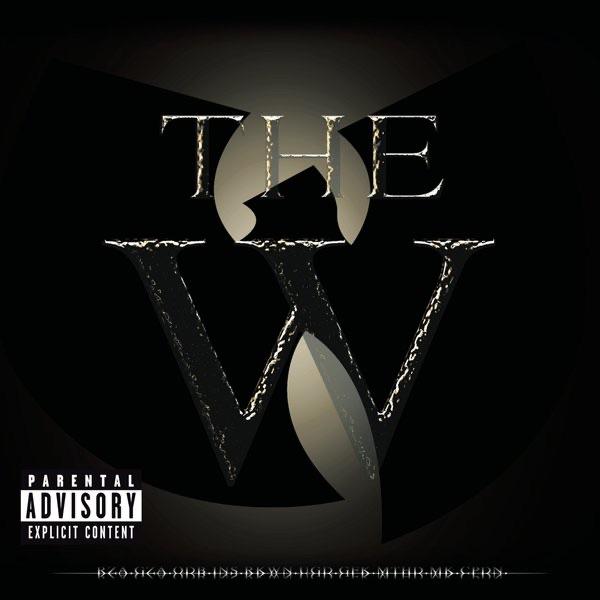
After the excess of Wu-Tang Forever and the incredible flood of solo albums that followed (most notably Ghostface’s Supreme Clientele, Method Man and Redman’s Blackout!, and RZA’s soundtrack for the Jim Jarmusch movie Ghost Dog), it was easy to overlook The W—or at least feel so oversaturated by Wu-Tang that you put it off for a while. But consider the album in the context of its moment and it’s a remarkable achievement. This was the era of Nelly and Diddy, of R&B hybrids like Usher and Aaliyah. Rap wasn’t subculture anymore—it was the dominant sound in American pop. And here you had nine unsmiling guys from Staten Island making Platinum records out of stuff like “Careful (Click Click)” and the agonizing “I Can’t Go to Sleep.” If The W wasn’t the most uncommercial-sounding commercial rap album of 2000, nothing was. Nothing the group did can really compare to Enter the Wu-Tang. But as pure sound, RZA’s production had never felt sharper or more fully evolved—you could play this as instrumentals and it’d still work. Future-feeling, past-plundering, catchy as cartoons and obscure as the inside of a tomb, this is music—music—that helped expand what we listen for when we hear hip-hop. Yeah, some of the verses sound a little phoned-in, but the best tracks (let’s throw in “Hollow Bones” and “Protect Ya Neck (The Jump Off)”) are as vital as they ever sounded, not to mention their last culture-changing statement before settling into their status as a kind of fragmented legacy act. An album earlier, GZA had famously challenged rappers to “make it brief, son/Half short and twice strong.” After the movie-length Wu-Tang Forever, the brevity and directness of The W was it.

Wu-Chronicles: Chapter 2
Iron Flag

Wu-Tang Collective

Disciples of the 36 Chambers: Chapter 1 (Live)

Legend Of The Wu-Tang: Wu-Tang Clan's Greatest Hits
Even if you’ve committed every detail of the Shaolin-via-Staten-Island supergroup’s catalog to memory, this compilation showcases a little something extra alongside their best-known work. “Protect Ya Neck (Bloody Version)” offers an unedited, boisterous take on the original and “Method Man (Skunk Mix)” is a wilder, wavier mix. From the timelessly eerie classics of 36 Chambers to lesser-known loosies like the raspy, furious “Diesel,” the Wu still ain’t nothing to… you know the rest.
Preservation - EP

Wu-Tang Meets The Indie Culture

Lyrical Swords - EP
8 Diagrams

Wu: The Story Of The Wu-Tang Clan
Even though Wu: The Story of the Wu-Tang Clan encompasses ten years and several albums, the compilation is threaded together by the crew’s inimitable sonic signature. It's a formula cooked up by Wu-Tang’s mastermind, the RZA. Icy and skeletal, his production style seems to emanate from a sinister netherworld. He is one of the few hip-hop producers willing to embrace warped time signatures and atonal flourishes, but even in its most grotesque forms Wu-Tang’s music is rooted in the rhythms of classic funk and soul. Though the Wu-Tang Clan is usually identified by this sound, RZA has actually included a variety of sonic backdrops on the Wu-Tang albums. The Story of the Wu-Tang Clan works as a primer because it sticks to the core sound and traces it over the course of the crew’s ten year history. Whereas other greatest-hits compilations focused on the Wu-Tang’s potent rhyme styles, this is the collection to reach for when you need to summarize the group’s allegiance to a singular sonic blueprint.

Wu-Tang Meets The Indie Culture Instrumentals

Wu-Tang Meets the Indie Culture, Vol. 1 (Instrumentals)

Wu-Tang Meets the Indie Culture Vol. 2: Enter the Dubstep

Wu Music Group presents Pollen: The Swarm, Pt. 3

Soundtracks from the Shaolin Temple

The Essential Wu-Tang Clan

A Better Tomorrow
Wu-Tang mastermind RZA reconvenes his famously fractious clan for a sixth and possibly final album. A Better Tomorrow may be but an echo of the group's seminal masterpiece Enter the Wu-Tang (36 Chambers), but it's still the Wu: gritty, grimy, bumpin'. Having graduated from the days of tape decks and turntables to film scores and session players, producer RZA turns in a slicker vision here: "Preacher's Daughter" is a lush throwback to Dusty Springfield, and the nimble "Keep Watch" is jazzy boom-bap. The album kicks off with "Ruckus in B-Minor," a throwback to the classic "Bring da Ruckus"; it features a cameo by deceased member Ol' Dirty Bastard.

Of Mics and Men (Music from the Showtime Documentary Series)

Enter the Wu - Tang (36 Chambers) Live from N.Y. State of Mind Tour at Climate Pledge Arena

Black Samson, the Bastard Swordsman
After enjoying its heyday in the ’90s and 2000s as arguably the greatest hip-hop group ever, the Wu-Tang Clan spent the late 2010s to mid-2020s solidifying its legacy in various ways—a television series, a docuseries, a Las Vegas residency, a cross-generational pop-culture touchstone. But fans who’ve wanted a Wu-Tang Clan album have often had to accept consolation prizes; 2015’s Once Upon a Time in Shaolin was a single copy auctioned for millions of dollars. Mathematics is as legitimate as anyone to continue the Wu-Tang Clan’s legacy. He isn’t one of the original nine members, but he’s produced songs on some of the group’s most beloved solo and group albums (The W, Supreme Clientele, and Bulletproof Wallets, for example), has served as their longtime DJ, and is even the creator of its iconic W logo. Black Samson, The Bastard Swordsman is his second collaborative album with the group, and earns its Wu-Tang Clan co-billing: All the members of the group make appearances here, and he capably continues the group’s distinctively dark, cinematic aesthetic. “Mandingo” finds Raekwon, Inspectah Deck, Method Man, and Cappadonna slinging bars around classic kung fu flick samples, while Ghostface Killah delivers a heartfelt ode to his late mother on “Claudine” with solemn singing by Nicole Bus and a rich, piano-driven sound bed. Mathematics also enlists smart guest appearances outside of the Clan: Benny the Butcher squares up with Meth on “Warriors Two, Cooley High,” while West Coast spitter KXNG Crooked joins Cappadonna for the sentimental album closer “Charleston Blue, Legend of a Fighter.” There aren’t any songs that feature more than three or four Wu-Tang Clan members at once, but everyone shows up and delivers authentically sharp verses, and with Mathematics’ expert understanding of the Wu sound, fans of the group will be satisfied with this addition to the catalog.

Black Samson, the Bastard Swordsman (Deluxe)
