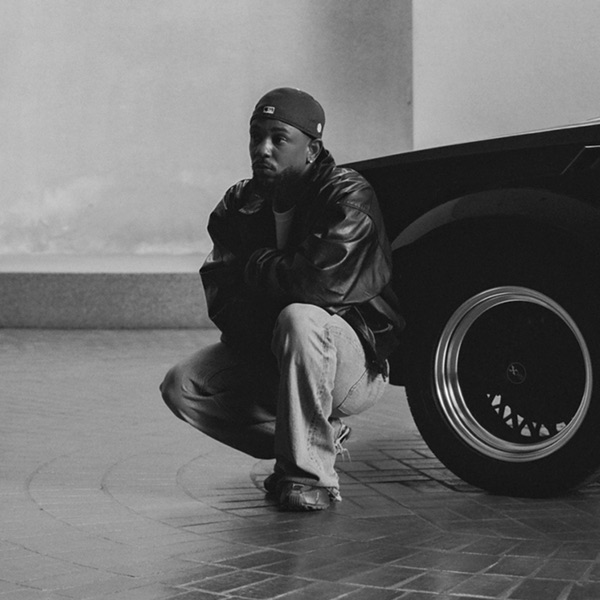
Artist
Kendrick Lamar
Albums

Overly Dedicated
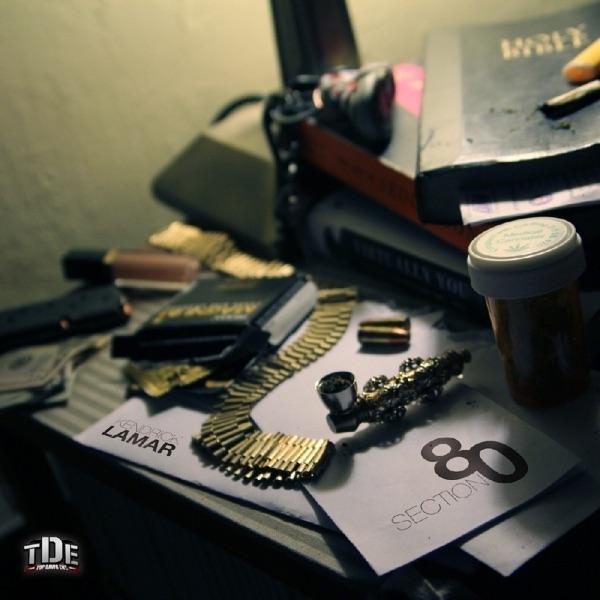
Section.80
The rapper formerly known as K-Dot had built a buzz prior to his 2011 breakthrough album, but the Compton native still had everything to prove: In spite of a coveted co-sign from Dr. Dre, he was barely out of the shadow of his Top Dawg Entertainment labelmate Jay Rock, on whose tour Lamar still regularly served as hype-man. Los Angeles’ old guard of gangsta rap greats was waning; the hottest trend in L.A. rap around the time Lamar was forming his Black Hippy super-group (alongside Jay Rock, Ab-Soul, and ScHoolboy Q) was the jerkin’ movement, a fun but frivolous dance craze. Los Angeles hip-hop needed a new hero, and Lamar stepped up to the plate. But Section.80 was far from a bid for mainstream attention. Over jazzy beats suited for contemplative spells, Lamar raps like he’s searching, bar by bar, for answers to America’s biggest questions, turning a critical eye on his own reality and the systems that reinforce it. The title itself combines Section 8 housing, the low-income developments in which Lamar was raised, with the decade of Lamar’s birth; he thus fashioned himself an ambassador for a generation raised under Ronald Reagan and the crack epidemic. “You know why we crack babies? Because we born in the ’80s,” Lamar spits on lead single “A.D.H.D.,” a generational study as sharp as it is catchy. Ultimately, though, Section.80 channels that unrest into a quest for enlightenment; on the knocking “HiiiPower,” Lamar conjures visions of Martin Luther King, Jr. and Malcolm X. and urges listeners to “build your own pyramids, write your own hieroglyphs.” Upon the album's release, some listeners thought this stuff was too radical for Lamar to ever fully break into the mainstream; but the maverick was on the threshold of something even bigger.

good kid, m.A.A.d city (Deluxe Version)
100 Best Albums A few days after releasing 2012’s good kid, m.A.A.d city, the then-25-year-old Kendrick Lamar deemed his sophomore studio album “classic-worthy.” He wasn’t lying: Lamar’s sophomore album is one of the defining hip-hop records of the 21st century. On the surface, good kid, m.A.A.d city is a hood tragedy, with Lamar painting a vivid picture of Black and brown youths growing up in underserved communities. But the album is also powered by faith and hope, with Lamar chronicling his turbulent coming-of-age through a cast of compelling characters that portray the trauma, familial guidance, and relationships that led to his inevitable ascent. West Coast hip-hop elders like Snoop and Dre anointed Lamar to carry on the legacy of gangsta rap, and his second studio album—conceptual enough to be a rock opera—certainly uplifts the genre with its near-biblical themes: religion vs. violence and monogamy vs. lust. Sitting just a few miles from Compton, where much of good kid, m.A.A.d city takes place, Lamar pieced together tracks alongside collaborators Sounwave and Dave Free, both of whom had known the prolific rapper since high school. Throughout the writing process, Lamar would frequently return to his childhood neighborhood to relive the “mental space” he was in during the early days of his rap career, unearthing the deeply personal tales that came to shape the monumental artist. From the album’s opening scene—a collective prayer of gratitude—Lamar’s approach is entirely theatric (he even gives good kid, m.A.A.d city a subtitle: “A Short Film by Kendrick Lamar”). And he never misses an opportunity to hold listeners in his grip, unspooling a series of vulnerable confessions over the album’s 12 tracks. Graphic scenes of violence, addiction, and disillusionment are pervasive here. But Lamar makes even the harshest truths easy to swallow, as he does on “Swimming Pools (Drank),” a vivid tale of alcoholism. good kid, m.A.A....

good kid, m.A.A.d city (Deluxe)
A few days after releasing 2012’s good kid, m.A.A.d. city, the then-25-year-old Kendrick Lamar deemed his sophomore album “classic-worthy.” He wasn’t lying: Lamar’s sophomore album is one of the defining hip-hop records of the 21st century. On the surface, good kid, m.A.A.d. city is a hood tragedy, with Lamar painting a vivid picture of Black and brown youths growing up in underserved communities. But the album is also powered by faith and hope, with Lamar chronicling his turbulent coming-of-age through a cast of compelling characters that portray the trauma, familial guidance, and relationships that led to his inevitable ascent. After the release of his 2011 studio debut, Section.80, Lamar had landed a splashy deal with Interscope Records and Dr. Dre’s Aftermath Entertainment. Despite his newfound access to state-of-the-art recording spaces and high-profile producers, the rapper opted to return to his roots for good kid, m.A.A.d. city, spending time at the Carson home studio of Top Dawg Entertainment, where he wrote and recorded his debut set. Sitting just a few miles from Compton, where much of good kid, m.A.A.d. city takes place, Lamar pieced together tracks alongside collaborators Sounwave and Dave Free, both of whom have known the prolific rapper since high school. Throughout the writing process, Lamar would frequently return to his childhood neighborhood to relive the “mental space” he was in during the early days of his rap career, unearthing the deeply personal tales that came to shape the monumental artist. From the album’s opening scene—a collective prayer of gratitude—Lamar’s approach is entirely theatric (he even gives good kid, m.A.A.d. city a subtitle: “A Short Film by Kendrick Lamar”). And he never misses an opportunity to hold listeners in his grip, unspooling a series of vulnerable confessions over the album’s 12 tracks. Graphic scenes of violence, addiction, and disillusionment are pervasive here. But ...

good kid, m.A.A.d city
A few days after releasing 2012’s good kid, m.A.A.d. city, the then-25-year-old Kendrick Lamar deemed his sophomore album “classic-worthy.” He wasn’t lying: Lamar’s sophomore album is one of the defining hip-hop records of the 21st century. On the surface, good kid, m.A.A.d. city is a hood tragedy, with Lamar painting a vivid picture of Black and brown youths growing up in underserved communities. But the album is also powered by faith and hope, with Lamar chronicling his turbulent coming-of-age through a cast of compelling characters that portray the trauma, familial guidance, and relationships that led to his inevitable ascent. After the release of his 2011 studio debut, Section.80, Lamar had landed a splashy deal with Interscope Records and Dr. Dre’s Aftermath Entertainment. Despite his newfound access to state-of-the-art recording spaces and high-profile producers, the rapper opted to return to his roots for good kid, m.A.A.d. city, spending time at the Carson home studio of Top Dawg Entertainment, where he wrote and recorded his debut set. Sitting just a few miles from Compton, where much of good kid, m.A.A.d. city takes place, Lamar pieced together tracks alongside collaborators Sounwave and Dave Free, both of whom have known the prolific rapper since high school. Throughout the writing process, Lamar would frequently return to his childhood neighborhood to relive the “mental space” he was in during the early days of his rap career, unearthing the deeply personal tales that came to shape the monumental artist. From the album’s opening scene—a collective prayer of gratitude—Lamar’s approach is entirely theatric (he even gives good kid, m.A.A.d. city a subtitle: “A Short Film by Kendrick Lamar”). And he never misses an opportunity to hold listeners in his grip, unspooling a series of vulnerable confessions over the album’s 12 tracks. Graphic scenes of violence, addiction, and disillusionment are pervasive here. But ...

Set Precedent (feat. Kendrick Lamar)

To Pimp a Butterfly
Thanks to multiple hit singles—and no shortage of critical acclaim—2012’s good kid, m.A.A.d city propelled Kendrick Lamar into the hip-hop mainstream. His 2015 follow-up, To Pimp a Butterfly, served as a raised-fist rebuke to anyone who thought they had this Compton-born rapper figured out. Intertwining Afrocentric and Afrofuturist motifs with poetically personal themes and jazz-funk aesthetics, To Pimp A Butterfly expands beyond the gangsta rap preconceptions foisted upon Lamar’s earlier works. Even from the album’s first few seconds—which feature the sound of crackling vinyl and a faded Boris Gardiner soul sample—it’s clear To Pimp a Butterfly operates on an altogether different cosmic plane than its decidedly more commercial predecessor. The album’s Flying Lotus-produced opening track, “Wesley’s Theory,” includes a spoken-word invocation from musician Josef Leimberg and an appearance by Parliament-Funkadelic legend George Clinton—names that give To Pimp a Butterfly added atomic weight. Yet Lamar’s lustful and fantastical verses, which are as audacious as the squirmy Thundercat basslines underneath, never get lost in an album packed with huge names. Throughout To Pimp a Butterfly, Lamar goes beyond hip-hop success tropes: On “King Kunta,” he explores his newfound fame, alternating between anxiety and big-stepping braggadocio. On “The Blacker the Berry,” meanwhile, Lamar pointedly explores and expounds upon identity and racial dynamics, all the while reaching for a reckoning. And while “Alright” would become one of the rapper’s best-known tracks, it’s couched in harsh realities, and features an anthemic refrain delivered in a knowing, weary rasp that belies Lamar’s young age. He’s only 27, and yet he’s already seen too much. The cast assembled for this massive effort demonstrates not only Lamar’s reach, but also his vast vision. Producers Terrace Martin and Sounwave, both veterans of good kid, m.A.A.d city, are ...

untitled unmastered.
Every element of Kendrick Lamar’s untitled unmastered. tells you something about the Compton MC’s provocative, multi-layered genius. Take the contrast of the collection's ultra-generic title and its attention-grabbing, out-of-left-field release. Take the retro-futuristic, Funkadelic-inspired grooves that simmer under tracks like “untitled 02” and “untitled 06.” These are only the beginning of the album's hypnotic, nuanced nod to hip-hop’s deep roots and unstoppable political and expressive currency. Songs like “untitled 03” and “untitled 05”—with layered references, wild-eyed jazz solos, and cutting insight—continue Lamar's winning streak.
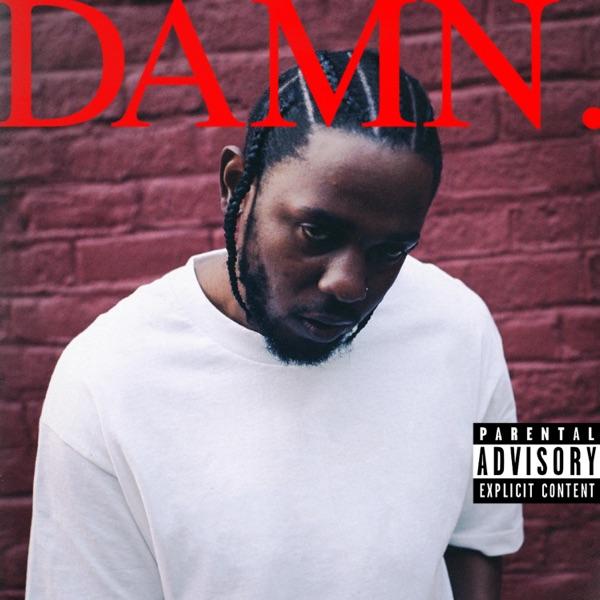
DAMN.
In the two years since To Pimp a Butterfly, we’ve hung on Kendrick Lamar's every word—whether he’s destroying rivals on a cameo, performing the #blacklivesmatter anthem on top of a police car at the BET Awards, or hanging out with Obama. So when DAMN. opens with a seemingly innocuous line—"So I was taking a walk the other day…”—we're all ears. The gunshot that abruptly ends the track is a signal: DAMN. is a grab-you-by-the-throat declaration that’s as blunt, complex, and unflinching as the name suggests. If Butterfly was jazz-inflected, soul-funk vibrance, DAMN. is visceral, spare, and straight to the point, whether he’s boasting about "royalty inside my DNA” on the trunk-rattling "DNA." or lamenting an anonymous, violent death on the soul-infused “FEAR.” No topic is too big to tackle, and the songs are as bold as their all-caps names: “PRIDE.” “LOYALTY.” “LOVE.” "LUST.” “GOD.” When he repeats the opening line to close the album, that simple walk has become a profound journey—further proof that no one commands the conversation like Kendrick Lamar.

DAMN. COLLECTORS EDITION.
In the two years since To Pimp a Butterfly, we’ve hung on Kendrick Lamar's every word—whether he’s destroying rivals on a cameo, performing the #blacklivesmatter anthem on top of a police car at the BET Awards, or hanging out with Obama. So when DAMN. opens with a seemingly innocuous line—"So I was taking a walk the other day…”—we're all ears. The gunshot that abruptly ends the track is a signal: DAMN. is a grab-you-by-the-throat declaration that’s as blunt, complex, and unflinching as the name suggests. If Butterfly was jazz-inflected, soul-funk vibrance, DAMN. is visceral, spare, and straight to the point, whether he’s boasting about "royalty inside my DNA” on the trunk-rattling "DNA." or lamenting an anonymous, violent death on the soul-infused “FEAR.” No topic is too big to tackle, and the songs are as bold as their all-caps names: “PRIDE.” “LOYALTY.” “LOVE.” "LUST.” “GOD.” When he repeats the opening line to close the album, that simple walk has become a profound journey—further proof that no one commands the conversation like Kendrick Lamar.

Black Panther: The Album
Kendrick Lamar, TDE CEO Anthony “Top Dawg” Tiffith, and director Ryan Coogler put their heads together for this album of music from and inspired by Black Panther. Along with TDE stars SZA, ScHoolBoy Q, and Jay Rock, the trio pulled artists from across the hip-hop spectrum. Future, 2 Chainz, Travis Scott, and Vince Staples mingle with Sacramento spitter Mozzy and Bay Area crew SOB X RBE. The Weeknd, Jorja Smith, and Khalid represent R&B’s shining guard. And Kendrick destroys the five songs he’s featured on. Marrying sound and vision, a movement and a movie, Black Panther taps into Kendrick’s and T’Challa’s revolutionary spirit.

Mr. Morale & The Big Steppers
When Kendrick Lamar popped up on two tracks from Baby Keem’s The Melodic Blue (“range brothers” and “family ties”), it felt like one of hip-hop’s prophets had descended a mountain to deliver scripture. His verses were stellar, to be sure, but it also just felt like way too much time had passed since we’d heard his voice. He’d helmed 2018’s Black Panther compilation/soundtrack, but his last proper release was 2017’s DAMN. That kind of scarcity in hip-hop can only serve to deify an artist as beloved as Lamar. But if the Compton MC is broadcasting anything across his fifth proper album Mr. Morale & The Big Steppers, it’s that he’s only human. The project is split into two parts, each comprising nine songs, all of which serve to illuminate Lamar’s continually evolving worldview. Central to Lamar’s thesis is accountability. The MC has painstakingly itemized his shortcomings, assessing his relationships with money (“United in Grief”), white women (“Worldwide Steppers”), his father (“Father Time”), the limits of his loyalty (“Rich Spirit”), love in the context of heteronormative relationships (“We Cry Together,” “Purple Hearts”), motivation (“Count Me Out”), responsibility (“Crown”), gender (“Auntie Diaries”), and generational trauma (“Mother I Sober”). It’s a dense and heavy listen. But just as sure as Kendrick Lamar is human like the rest of us, he’s also a Pulitzer Prize winner, one of the most thoughtful MCs alive, and someone whose honesty across Mr. Morale & The Big Steppers could help us understand why any of us are the way we are.
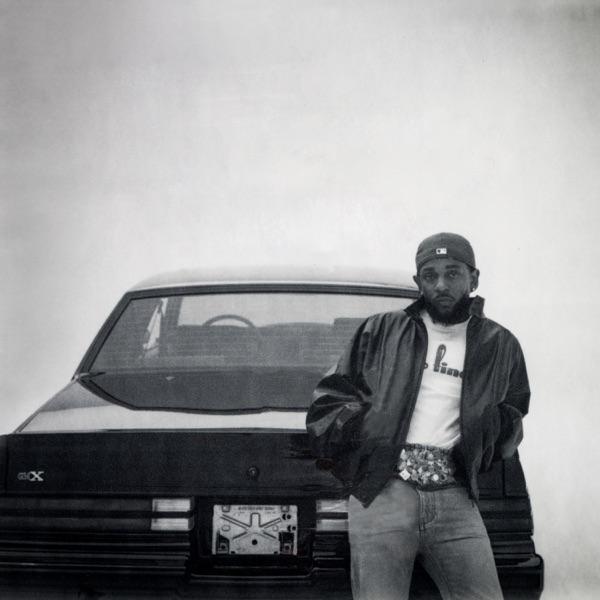
GNX
If there were any remaining doubts as to hip-hop’s MVP, consider the decision stamped: Kendrick Lamar officially won 2024. There were whispers that Compton’s finest was working on an album in the wake of his feud with Drake, a once-in-a-generation beef that kept jaws dropped for months. (Perhaps you’ve heard of a little song called “Not Like Us,” an immediate entry into the canon of all-time great diss tracks.) After a sold-out celebration at the Kia Forum, an armful of Grammy nods and streaming records, and the headlining slot at next year’s Super Bowl, Lamar ties up his biggest year yet with a bow with his sixth album, GNX, the most legitimately surprising surprise drop since BEYONCÉ in 2013. Named for his beloved classic Buick, GNX finds Kendrick wielding a hatchet he’s by no means ready to bury, still channeling this summer’s cranked-to-11 energy. On “wacced out murals,” he’s riding around listening to Anita Baker, plotting on several downfalls: “It used to be fuck that n***a, but now it’s plural/Fuck everybody, that’s on my body.” (Yes, there’s a nod to his Super Bowl drama with Lil Wayne.) If you’ve been holding your breath for Jack Antonoff to link with Mustard, wait no more—the seemingly odd couple share production credits on multiple tracks, the explosive “tv off” among them. Still, K.Dot keeps you guessing: It’s not quite 12 tracks of straight venom over world-conquering West Coast beats. SZA helps cool things down on the Luther Vandross-sampling “luther,” while Lamar snatches back a borrowed title on “heart pt. 6” to remember the early days of TDE: “Grinding with my brothers, it was us against them, no one above us/Bless our hearts.” He cycles through past lives over a flip of 2Pac’s “Made N****z” on “reincarnated” before getting real with his father about war, peace, addiction, and ego death, and on “man at the garden,” he outlines his qualifications for the position of GOAT. Here’s another bullet point to add to that CV: On ...